
Video
Audio
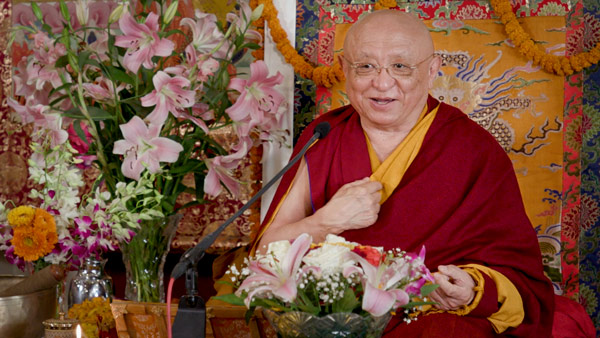
11:34
How to lead to proper, proper path.
Because humans' minds are very doubting and very...
...skeptical and doubting, more and more. Twenty one century, we say civilized. What civilized? Doubt. Doubting. More doubting. Doubt to others.
Finally, doubting to self. Doubting to everything.
Kaliyuga is intelligent with doubting.
These days, we are extremely smart and we are very intelligent. But with this intelligence comes another quality, another very positive quality. We are very hesitant, we are very doubtful, very, very skeptical. So we study a lot, we get highly educated, but we don't really feel trust towards anybody or anything. We can't place our trust even into those who are very close to us, like family members, relatives, friends. Actually, these days it is the case that we really can't easily trust each other. And this makes our mind very unsettled. In the past, people trusted, put their whole trust and hope into religion. Of course, people do place or go for refuge, or place the trust in things such as education, possessions, food and clothing. And we go for refuge in all kinds of things on a daily basis. So these days, there are not so many who follow religions. There are not so many who we could call, who are proponents of mind. There are many more who are proponents of matter, who are inclined towards materialism. What we really want, when we um... when we as a good Buddhist, what we really want to achieve is we want to make everybody happy. We want that all sentient beings, without exception, possess the cause of happiness. But if you look around, people are really overwhelmed by superstition, by hesitation, by doubt. And it's very difficult for them to really trust each other. We even trust religions, trust religious approaches. What they really put or place their trust in these days is science. So when we want to help others, we need to skillfully be able to help others, how to make others happy. And the way to make others happy is to make them understand what causes happiness. What is the cause for happiness and joy? And the cause for happiness and joy is to understand the nature of all phenomena. To give rise to compassion and loving kindness. To understand that all phenomena, although they appear, they do not truly exist. So therefore, it's important that we really make the firm decision that this is it. This is what causes happiness. The cause of happiness is to understand the nature of the mind, the nature of phenomena. There is nothing else which can really bring permanent and stable happiness and liberation. So how to help others? We need to help them in accordance with their inclinations and capacities, capacities So not everybody wants to study. Not everybody can place their trust in religion or the Buddha's teachings. Not everybody is able, like all of you, to believe or to place their trust in the Buddha's teachings and actually also practice them. So how to benefit? How to benefit all sentient beings? So for... There is a different ways. For instance, you can study the Buddhist philosophy here at the Rangjung Yeshe Institute, at the Shedra But you can also access those courses online. The philosophies are taught online and also the Tibetan language. If you want to practice, you follow online meditation course of Tara's Triple Excellence. Calm, I... I think... I think many years before, I keep saying, when I give talk in public, I'm saying calmness is very important. No calm, no kind. No kind, no clear. And some people like that more than dharmic terminology. They say, ooh, oooh, oooh. Because not saying samatha, vipassanā, emptiness. It's a calmness. Oh, very nice. Oh, so nice. Very truth calmness. They think that they're very smart. Smart. Because we're using the same language. Kindness. No calm, no kind, no kind, no clear. Oh, very good. You know who came to see me? The Indian's ex-president, what? Ahu, Ahut Dawoodawee, what? He's a scientist? Abdul Kalam. Abdul Kalam. Ablu... Abdul... Abdul Kalam. I getting message. The Nepali government says, oh, Abdul Kalam is coming to see Chokyi Nyima Rinpoche. Where is Chokyi Nyima? They're looking me. They say, oh, I don't know. I not ask him to come. And okay, so welcome. So they make big arrange(ment). Many motor bike. But Nepalese and Nepali, they took wrong direction. They took to Boudha. So he need to come from Boudha by feet. he's old, not so... Anyway, we talk lot. Then what he say, you know, I like you. You say calm, no calm, no kind. No kind, no clear. That's so... This is the crucial, This is the point. Isn't it? I say yes. Then we spent some times. Then I went down with him in main hall. He is Muslim. And he is very powerful man. President, ex-president. Also he's very smart. He made the... moon.
One machine. Anyway, we like each other. So I took down and... I tried my best to do the sort of diplomatic way. I took round quick as possible. But front of Buddha Śākyamuni's statues, he stay like this. Three, four minutes without moving. I'm shocked. He not need to do this to show us. This is from his heart feeling.
Then look to Buddha...
Yeah. So then, then he went to parliament. Nepal parliament. And then he gives same talks. I learned from my teacher. No calm, no kind... No kind, no clear. So Nepalese thing, who, what, da, da, da, da.
And I thinking lot myself. Why we unhappy? What's the cause of unhappy? Yes, negative emotion. But to put... among that, put pure. Okay, this negative emotion make us unhappy. This one, two, three. So I'm thinking lot myself. I investigate me. I put myself what make me unhappy. What make me happy. I check. Then I found three. Cause of three. One, what I have, what I have. If I not appreciate, I'm not happy. If I have lot, if I'm not appreciate, I'm not happy. If I have little, I appreciate, I'm happy. Then after, oh this is the trick. Not the object, subject. No appreciate, not happy. Appreciate, happy. Oh, now I know. In teaching mention, lot, contentment, appreciation, satisfaction. Oh, so I apply, I'm very happy. Whenever I'm a little bit unhappy, I make myself, I use my technique. It works. It really works. So I'm sharing this to other. Other also says it works. One. Second, is if we not get along. If we terribly get not along, terrible unhappy. If we so-so not get along with someone, so-so unhappy. If we little bit, even irritate each other, it really disturbs. Whole day it disturbs. Even night not so good. So then it's very important to fix apologizing and forgiveness. It's so powerful. So I practice that. But that make me very happy again. It works. Number third. Jealousy is awful. If others, mundanely, even spiritually, if they are more success, we jealous. Of course, you can see many are much more success than you. There are so many are more success than you. How looks are.
Many reasons. So, rejoicing is very, very powerful. Since I practice rejoice, it make me really happy.
Because humans' minds are very doubting and very...
...skeptical and doubting, more and more. Twenty one century, we say civilized. What civilized? Doubt. Doubting. More doubting. Doubt to others.
Finally, doubting to self. Doubting to everything.
Kaliyuga is intelligent with doubting.
These days, we are extremely smart and we are very intelligent. But with this intelligence comes another quality, another very positive quality. We are very hesitant, we are very doubtful, very, very skeptical. So we study a lot, we get highly educated, but we don't really feel trust towards anybody or anything. We can't place our trust even into those who are very close to us, like family members, relatives, friends. Actually, these days it is the case that we really can't easily trust each other. And this makes our mind very unsettled. In the past, people trusted, put their whole trust and hope into religion. Of course, people do place or go for refuge, or place the trust in things such as education, possessions, food and clothing. And we go for refuge in all kinds of things on a daily basis. So these days, there are not so many who follow religions. There are not so many who we could call, who are proponents of mind. There are many more who are proponents of matter, who are inclined towards materialism. What we really want, when we um... when we as a good Buddhist, what we really want to achieve is we want to make everybody happy. We want that all sentient beings, without exception, possess the cause of happiness. But if you look around, people are really overwhelmed by superstition, by hesitation, by doubt. And it's very difficult for them to really trust each other. We even trust religions, trust religious approaches. What they really put or place their trust in these days is science. So when we want to help others, we need to skillfully be able to help others, how to make others happy. And the way to make others happy is to make them understand what causes happiness. What is the cause for happiness and joy? And the cause for happiness and joy is to understand the nature of all phenomena. To give rise to compassion and loving kindness. To understand that all phenomena, although they appear, they do not truly exist. So therefore, it's important that we really make the firm decision that this is it. This is what causes happiness. The cause of happiness is to understand the nature of the mind, the nature of phenomena. There is nothing else which can really bring permanent and stable happiness and liberation. So how to help others? We need to help them in accordance with their inclinations and capacities, capacities So not everybody wants to study. Not everybody can place their trust in religion or the Buddha's teachings. Not everybody is able, like all of you, to believe or to place their trust in the Buddha's teachings and actually also practice them. So how to benefit? How to benefit all sentient beings? So for... There is a different ways. For instance, you can study the Buddhist philosophy here at the Rangjung Yeshe Institute, at the Shedra But you can also access those courses online. The philosophies are taught online and also the Tibetan language. If you want to practice, you follow online meditation course of Tara's Triple Excellence. Calm, I... I think... I think many years before, I keep saying, when I give talk in public, I'm saying calmness is very important. No calm, no kind. No kind, no clear. And some people like that more than dharmic terminology. They say, ooh, oooh, oooh. Because not saying samatha, vipassanā, emptiness. It's a calmness. Oh, very nice. Oh, so nice. Very truth calmness. They think that they're very smart. Smart. Because we're using the same language. Kindness. No calm, no kind, no kind, no clear. Oh, very good. You know who came to see me? The Indian's ex-president, what? Ahu, Ahut Dawoodawee, what? He's a scientist? Abdul Kalam. Abdul Kalam. Ablu... Abdul... Abdul Kalam. I getting message. The Nepali government says, oh, Abdul Kalam is coming to see Chokyi Nyima Rinpoche. Where is Chokyi Nyima? They're looking me. They say, oh, I don't know. I not ask him to come. And okay, so welcome. So they make big arrange(ment). Many motor bike. But Nepalese and Nepali, they took wrong direction. They took to Boudha. So he need to come from Boudha by feet. he's old, not so... Anyway, we talk lot. Then what he say, you know, I like you. You say calm, no calm, no kind. No kind, no clear. That's so... This is the crucial, This is the point. Isn't it? I say yes. Then we spent some times. Then I went down with him in main hall. He is Muslim. And he is very powerful man. President, ex-president. Also he's very smart. He made the... moon.
One machine. Anyway, we like each other. So I took down and... I tried my best to do the sort of diplomatic way. I took round quick as possible. But front of Buddha Śākyamuni's statues, he stay like this. Three, four minutes without moving. I'm shocked. He not need to do this to show us. This is from his heart feeling.
Then look to Buddha...
Yeah. So then, then he went to parliament. Nepal parliament. And then he gives same talks. I learned from my teacher. No calm, no kind... No kind, no clear. So Nepalese thing, who, what, da, da, da, da.
And I thinking lot myself. Why we unhappy? What's the cause of unhappy? Yes, negative emotion. But to put... among that, put pure. Okay, this negative emotion make us unhappy. This one, two, three. So I'm thinking lot myself. I investigate me. I put myself what make me unhappy. What make me happy. I check. Then I found three. Cause of three. One, what I have, what I have. If I not appreciate, I'm not happy. If I have lot, if I'm not appreciate, I'm not happy. If I have little, I appreciate, I'm happy. Then after, oh this is the trick. Not the object, subject. No appreciate, not happy. Appreciate, happy. Oh, now I know. In teaching mention, lot, contentment, appreciation, satisfaction. Oh, so I apply, I'm very happy. Whenever I'm a little bit unhappy, I make myself, I use my technique. It works. It really works. So I'm sharing this to other. Other also says it works. One. Second, is if we not get along. If we terribly get not along, terrible unhappy. If we so-so not get along with someone, so-so unhappy. If we little bit, even irritate each other, it really disturbs. Whole day it disturbs. Even night not so good. So then it's very important to fix apologizing and forgiveness. It's so powerful. So I practice that. But that make me very happy again. It works. Number third. Jealousy is awful. If others, mundanely, even spiritually, if they are more success, we jealous. Of course, you can see many are much more success than you. There are so many are more success than you. How looks are.
Many reasons. So, rejoicing is very, very powerful. Since I practice rejoice, it make me really happy.
How to lead to proper, proper path.
Because humans' minds are very doubting and very...
...skeptical and doubting, more and more. Twenty one century, we say civilized. What civilized? Doubt. Doubting. More doubting. Doubt to others.
Finally, doubting to self. Doubting to everything.
Kaliyuga is intelligent with doubting.
These days, we are extremely smart and we are very intelligent. But with this intelligence comes another quality, another very positive quality. We are very hesitant, we are very doubtful, very, very skeptical. So we study a lot, we get highly educated, but we don't really feel trust towards anybody or anything. We can't place our trust even into those who are very close to us, like family members, relatives, friends. Actually, these days it is the case that we really can't easily trust each other. And this makes our mind very unsettled. In the past, people trusted, put their whole trust and hope into religion. Of course, people do place or go for refuge, or place the trust in things such as education, possessions, food and clothing. And we go for refuge in all kinds of things on a daily basis. So these days, there are not so many who follow religions. There are not so many who we could call, who are proponents of mind. There are many more who are proponents of matter, who are inclined towards materialism. What we really want, when we um... when we as a good Buddhist, what we really want to achieve is we want to make everybody happy. We want that all sentient beings, without exception, possess the cause of happiness. But if you look around, people are really overwhelmed by superstition, by hesitation, by doubt. And it's very difficult for them to really trust each other. We even trust religions, trust religious approaches. What they really put or place their trust in these days is science. So when we want to help others, we need to skillfully be able to help others, how to make others happy. And the way to make others happy is to make them understand what causes happiness. What is the cause for happiness and joy? And the cause for happiness and joy is to understand the nature of all phenomena. To give rise to compassion and loving kindness. To understand that all phenomena, although they appear, they do not truly exist. So therefore, it's important that we really make the firm decision that this is it. This is what causes happiness. The cause of happiness is to understand the nature of the mind, the nature of phenomena. There is nothing else which can really bring permanent and stable happiness and liberation. So how to help others? We need to help them in accordance with their inclinations and capacities, capacities So not everybody wants to study. Not everybody can place their trust in religion or the Buddha's teachings. Not everybody is able, like all of you, to believe or to place their trust in the Buddha's teachings and actually also practice them. So how to benefit? How to benefit all sentient beings? So for... There is a different ways. For instance, you can study the Buddhist philosophy here at the Rangjung Yeshe Institute, at the Shedra But you can also access those courses online. The philosophies are taught online and also the Tibetan language. If you want to practice, you follow online meditation course of Tara's Triple Excellence. Calm, I... I think... I think many years before, I keep saying, when I give talk in public, I'm saying calmness is very important. No calm, no kind. No kind, no clear. And some people like that more than dharmic terminology. They say, ooh, oooh, oooh. Because not saying samatha, vipassanā, emptiness. It's a calmness. Oh, very nice. Oh, so nice. Very truth calmness. They think that they're very smart. Smart. Because we're using the same language. Kindness. No calm, no kind, no kind, no clear. Oh, very good. You know who came to see me? The Indian's ex-president, what? Ahu, Ahut Dawoodawee, what? He's a scientist? Abdul Kalam. Abdul Kalam. Ablu... Abdul... Abdul Kalam. I getting message. The Nepali government says, oh, Abdul Kalam is coming to see Chokyi Nyima Rinpoche. Where is Chokyi Nyima? They're looking me. They say, oh, I don't know. I not ask him to come. And okay, so welcome. So they make big arrange(ment). Many motor bike. But Nepalese and Nepali, they took wrong direction. They took to Boudha. So he need to come from Boudha by feet. he's old, not so... Anyway, we talk lot. Then what he say, you know, I like you. You say calm, no calm, no kind. No kind, no clear. That's so... This is the crucial, This is the point. Isn't it? I say yes. Then we spent some times. Then I went down with him in main hall. He is Muslim. And he is very powerful man. President, ex-president. Also he's very smart. He made the... moon.
One machine. Anyway, we like each other. So I took down and... I tried my best to do the sort of diplomatic way. I took round quick as possible. But front of Buddha Śākyamuni's statues, he stay like this. Three, four minutes without moving. I'm shocked. He not need to do this to show us. This is from his heart feeling.
Then look to Buddha...
Yeah. So then, then he went to parliament. Nepal parliament. And then he gives same talks. I learned from my teacher. No calm, no kind... No kind, no clear. So Nepalese thing, who, what, da, da, da, da.
And I thinking lot myself. Why we unhappy? What's the cause of unhappy? Yes, negative emotion. But to put... among that, put pure. Okay, this negative emotion make us unhappy. This one, two, three. So I'm thinking lot myself. I investigate me. I put myself what make me unhappy. What make me happy. I check. Then I found three. Cause of three. One, what I have, what I have. If I not appreciate, I'm not happy. If I have lot, if I'm not appreciate, I'm not happy. If I have little, I appreciate, I'm happy. Then after, oh this is the trick. Not the object, subject. No appreciate, not happy. Appreciate, happy. Oh, now I know. In teaching mention, lot, contentment, appreciation, satisfaction. Oh, so I apply, I'm very happy. Whenever I'm a little bit unhappy, I make myself, I use my technique. It works. It really works. So I'm sharing this to other. Other also says it works. One. Second, is if we not get along. If we terribly get not along, terrible unhappy. If we so-so not get along with someone, so-so unhappy. If we little bit, even irritate each other, it really disturbs. Whole day it disturbs. Even night not so good. So then it's very important to fix apologizing and forgiveness. It's so powerful. So I practice that. But that make me very happy again. It works. Number third. Jealousy is awful. If others, mundanely, even spiritually, if they are more success, we jealous. Of course, you can see many are much more success than you. There are so many are more success than you. How looks are.
Many reasons. So, rejoicing is very, very powerful. Since I practice rejoice, it make me really happy.
Because humans' minds are very doubting and very...
...skeptical and doubting, more and more. Twenty one century, we say civilized. What civilized? Doubt. Doubting. More doubting. Doubt to others.
Finally, doubting to self. Doubting to everything.
Kaliyuga is intelligent with doubting.
These days, we are extremely smart and we are very intelligent. But with this intelligence comes another quality, another very positive quality. We are very hesitant, we are very doubtful, very, very skeptical. So we study a lot, we get highly educated, but we don't really feel trust towards anybody or anything. We can't place our trust even into those who are very close to us, like family members, relatives, friends. Actually, these days it is the case that we really can't easily trust each other. And this makes our mind very unsettled. In the past, people trusted, put their whole trust and hope into religion. Of course, people do place or go for refuge, or place the trust in things such as education, possessions, food and clothing. And we go for refuge in all kinds of things on a daily basis. So these days, there are not so many who follow religions. There are not so many who we could call, who are proponents of mind. There are many more who are proponents of matter, who are inclined towards materialism. What we really want, when we um... when we as a good Buddhist, what we really want to achieve is we want to make everybody happy. We want that all sentient beings, without exception, possess the cause of happiness. But if you look around, people are really overwhelmed by superstition, by hesitation, by doubt. And it's very difficult for them to really trust each other. We even trust religions, trust religious approaches. What they really put or place their trust in these days is science. So when we want to help others, we need to skillfully be able to help others, how to make others happy. And the way to make others happy is to make them understand what causes happiness. What is the cause for happiness and joy? And the cause for happiness and joy is to understand the nature of all phenomena. To give rise to compassion and loving kindness. To understand that all phenomena, although they appear, they do not truly exist. So therefore, it's important that we really make the firm decision that this is it. This is what causes happiness. The cause of happiness is to understand the nature of the mind, the nature of phenomena. There is nothing else which can really bring permanent and stable happiness and liberation. So how to help others? We need to help them in accordance with their inclinations and capacities, capacities So not everybody wants to study. Not everybody can place their trust in religion or the Buddha's teachings. Not everybody is able, like all of you, to believe or to place their trust in the Buddha's teachings and actually also practice them. So how to benefit? How to benefit all sentient beings? So for... There is a different ways. For instance, you can study the Buddhist philosophy here at the Rangjung Yeshe Institute, at the Shedra But you can also access those courses online. The philosophies are taught online and also the Tibetan language. If you want to practice, you follow online meditation course of Tara's Triple Excellence. Calm, I... I think... I think many years before, I keep saying, when I give talk in public, I'm saying calmness is very important. No calm, no kind. No kind, no clear. And some people like that more than dharmic terminology. They say, ooh, oooh, oooh. Because not saying samatha, vipassanā, emptiness. It's a calmness. Oh, very nice. Oh, so nice. Very truth calmness. They think that they're very smart. Smart. Because we're using the same language. Kindness. No calm, no kind, no kind, no clear. Oh, very good. You know who came to see me? The Indian's ex-president, what? Ahu, Ahut Dawoodawee, what? He's a scientist? Abdul Kalam. Abdul Kalam. Ablu... Abdul... Abdul Kalam. I getting message. The Nepali government says, oh, Abdul Kalam is coming to see Chokyi Nyima Rinpoche. Where is Chokyi Nyima? They're looking me. They say, oh, I don't know. I not ask him to come. And okay, so welcome. So they make big arrange(ment). Many motor bike. But Nepalese and Nepali, they took wrong direction. They took to Boudha. So he need to come from Boudha by feet. he's old, not so... Anyway, we talk lot. Then what he say, you know, I like you. You say calm, no calm, no kind. No kind, no clear. That's so... This is the crucial, This is the point. Isn't it? I say yes. Then we spent some times. Then I went down with him in main hall. He is Muslim. And he is very powerful man. President, ex-president. Also he's very smart. He made the... moon.
One machine. Anyway, we like each other. So I took down and... I tried my best to do the sort of diplomatic way. I took round quick as possible. But front of Buddha Śākyamuni's statues, he stay like this. Three, four minutes without moving. I'm shocked. He not need to do this to show us. This is from his heart feeling.
Then look to Buddha...
Yeah. So then, then he went to parliament. Nepal parliament. And then he gives same talks. I learned from my teacher. No calm, no kind... No kind, no clear. So Nepalese thing, who, what, da, da, da, da.
And I thinking lot myself. Why we unhappy? What's the cause of unhappy? Yes, negative emotion. But to put... among that, put pure. Okay, this negative emotion make us unhappy. This one, two, three. So I'm thinking lot myself. I investigate me. I put myself what make me unhappy. What make me happy. I check. Then I found three. Cause of three. One, what I have, what I have. If I not appreciate, I'm not happy. If I have lot, if I'm not appreciate, I'm not happy. If I have little, I appreciate, I'm happy. Then after, oh this is the trick. Not the object, subject. No appreciate, not happy. Appreciate, happy. Oh, now I know. In teaching mention, lot, contentment, appreciation, satisfaction. Oh, so I apply, I'm very happy. Whenever I'm a little bit unhappy, I make myself, I use my technique. It works. It really works. So I'm sharing this to other. Other also says it works. One. Second, is if we not get along. If we terribly get not along, terrible unhappy. If we so-so not get along with someone, so-so unhappy. If we little bit, even irritate each other, it really disturbs. Whole day it disturbs. Even night not so good. So then it's very important to fix apologizing and forgiveness. It's so powerful. So I practice that. But that make me very happy again. It works. Number third. Jealousy is awful. If others, mundanely, even spiritually, if they are more success, we jealous. Of course, you can see many are much more success than you. There are so many are more success than you. How looks are.
Many reasons. So, rejoicing is very, very powerful. Since I practice rejoice, it make me really happy.
